Why we started Corporate Calm
A massage therapist who burnt out in corporate IT. A brand strategist with 12 years of running a business and zero staff turnover. Here's why we built Corporate Calm, and why we're doing it differently.
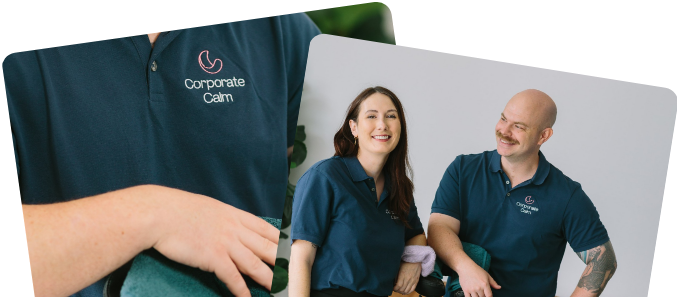
We didn't start Corporate Calm because we saw a gap in the market. We started it because we were frustrated by how badly the market was filling the gap.
Every corporate massage company we looked at said the same thing. Relaxation. Wellness. Team building. Vague promises wrapped in stock photos of hot stones and bamboo. Nobody was talking about the real impact of workplace stress on businesses. Nobody was using the research. Nobody was being honest about what this actually does for retention, sick leave and productivity.
So we decided to do it ourselves.
Two very different paths to the same problem
We came at workplace stress from completely different directions.
Jaak spent over a decade as a massage therapist, working with some of Australia's most elite athletes including AFL and Olympic competitors. He saw firsthand what happens when high performers invest in recovery. Then he treated CEOs of nationwide companies who brought him in to work with their teams across Adelaide. He saw the difference between the companies that treated their workforce like human beings versus the ones that offered perks that didn't move the needle.
Then he did something unexpected. He left massage therapy and moved into IT.
Two and a half years later, he burnt out. Not the "I need a holiday" kind. The kind where the company cares about output and nothing else, and you've been running on empty so long it feels normal. The irony of spending a decade helping people recover and then ignoring every sign in his own body wasn't lost on him.
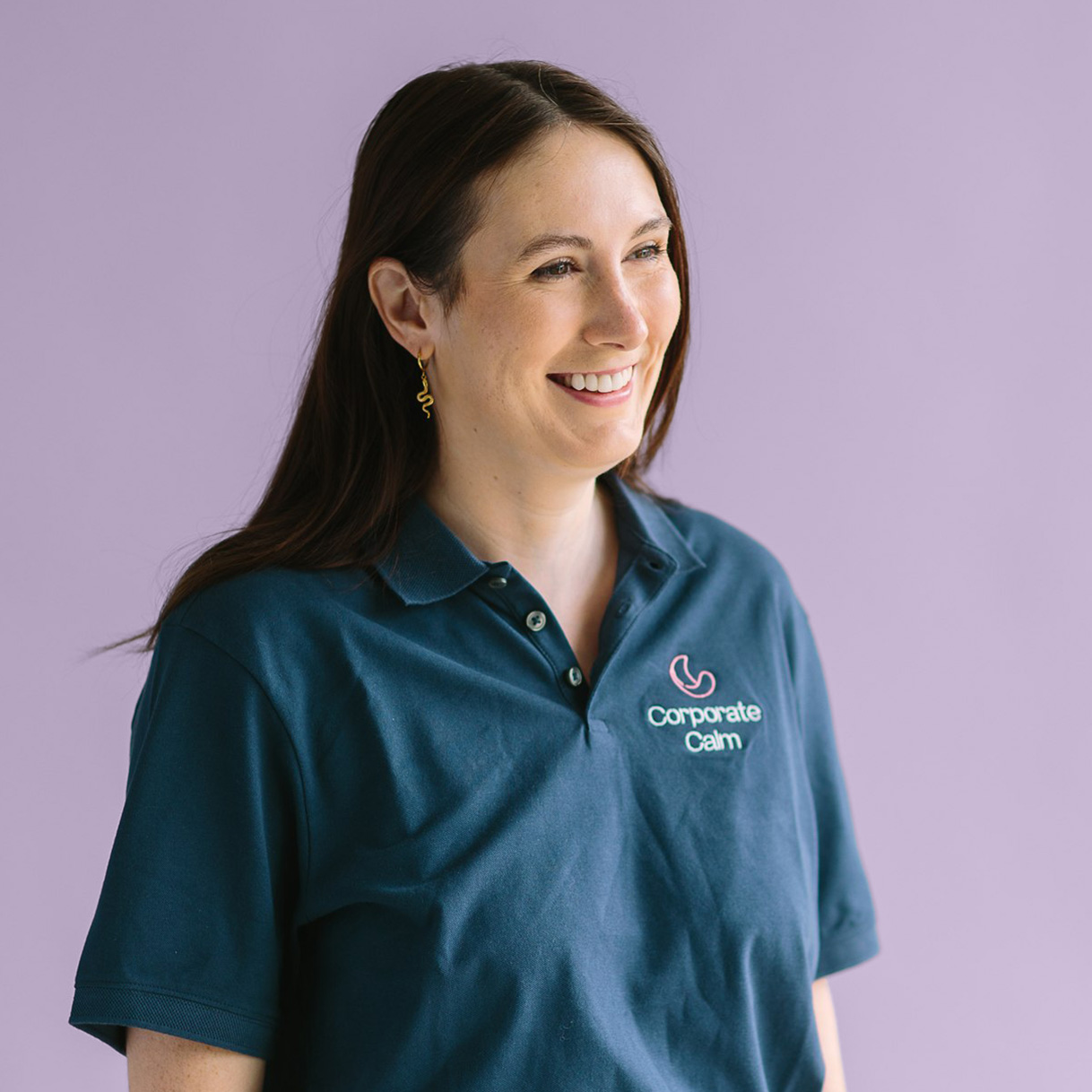
My path was different. I built Studio Sondar, a branding and website design studio, from scratch at 21 and have been running it for over 12 years. I also run West Palms Studio, a coworking space in Adelaide, which means I see people at every level of burnout, every single day.
But here's the part that matters. In 12 years of running a business, I've never lost a single employee. Not one. In an industry where burnout is rampant and small teams carry enormous pressure, every person who has joined my team has stayed for the long haul.
That didn't happen by accident.
What 12 years of zero turnover actually looks like
My team at Studio Sondar is small. Five people. And when you're a small team working on time-sensitive, high-demand projects, a lot of responsibility falls on everyone's shoulders. That's exactly the kind of environment where burnout thrives if you let it.
The difference is in the culture. Not the kind of "culture" that shows up on a careers page and evaporates the moment a deadline hits. The kind that's built into how the business actually operates.
Mental health days are taken seriously. Flexibility isn't a policy, it's the default. If someone needs a half day for an appointment, they take it. If they need a day off without notice, they take it. There's a shared respect where people don't take advantage of the environment because the environment doesn't take advantage of them.
And it goes both ways. When the pressure is on, the team shows up for me just as much as I show up for them. Because even the directors get burnt out. The difference is having a workplace where you can say that out loud.
Through running Studio Sondar and the coworking space, I also work as a brand strategist, helping business owners uncover what makes their business genuinely different. I'm fiercely against cookie-cutter approaches. Most of the people who come to me have hit a ceiling. They're working too much for too little and need to reposition their business to prioritise their own health and wellbeing alongside their growth.
Sound familiar?

From elite athletes to burnt-out employee
Jaak's career started on treatment tables with some of Australia's highest performers. Over a decade of massage therapy, working with professional athletes including AFL players and Olympic champions. People whose entire careers depended on their bodies performing at the highest level, week in, week out.
What he noticed early on was that none of them treated recovery as optional. These were people under immense physical and mental pressure, with their performance measured, ranked and broadcast nationally and across-the-world. If anyone could justify just pushing through, it was them. But they didn't. Recovery was built into every single week. Not as a reward for working hard, but as the reason they could keep working hard.
That understanding deepened when several CEOs he treated personally liked his work enough to bring him into their companies to treat their teams. Across Adelaide, he saw the inside of businesses that genuinely cared about their people and businesses that thought a fruit bowl and Friday drinks counted as a wellness strategy. The difference in how those teams performed, how long people stayed, and how they showed up every day was obvious from the treatment table.
Then he made a decision that surprised everyone. He left massage therapy and moved into IT.
He wanted new challenges. And at first, the work itself was interesting. But the environment was something else entirely. The business was corporate to its core. Output above everything. Deadlines above people. The kind of place where staying late was treated as proof you cared and asking for help felt like admitting weakness.
Within a year he could feel something was off. By two and a half years, he was properly burnt out. Not tired. Not stressed. Done. The irony of spending a decade helping people recover physically and then ignoring every signal in his own body wasn't lost on him. He'd seen what good recovery looked like. He'd seen what happened when companies invested in their people. And he'd just lived through the exact opposite.
That experience gave him something no qualification could. He understood workplace burnout from the inside. Not as a therapist observing it in a client's shoulders, but as the person carrying it. It's a big part of why we built Corporate Calm the way we did.

The conversation that started it all
The idea for Corporate Calm came from a conversation about how boring corporate massage businesses are.
Not the service itself. The service is brilliant. The research behind workplace massage is overwhelming. Sick leave drops. Retention improves. Productivity goes up. The return on investment is documented and defensible.
But nobody was talking about it like that. Every corporate massage website in Australia sounded the same. Relaxation. Rejuvenation. Wellness journeys. The kind of language that makes a CFO's eyes glaze over before they've finished the first paragraph.
I knew the stats would be there. Jaak knew the service inside out. Between us, we had branding, positioning, systems and processes on one side, and massage therapy, clinical expertise and marketing on the other. The combination made sense in a way that felt obvious once we said it out loud.
So we built Corporate Calm to do what nobody else was doing. Talk about corporate massage in Adelaide and across Australia in a way that's honest, backed by research, and built for the people who actually make decisions about employee wellbeing.

What we're actually building
Corporate Calm isn't just a massage company. It's what happens when you combine the mindset of elite athletic recovery with the reality of everyday Australian workplaces.
Jaak saw what happened when professional athletes invested in recovery as part of their performance strategy. Not as a treat, not as a reward, but as a fundamental part of how they operated at their best. We want to bring that same approach to businesses across Australia. The same principles. The same level of care. Applied to the people sitting in offices, call centres, IT support desks and employment services who are performing under pressure every single week without any structured recovery at all.
I bring 12 years of proof that investing in your people isn't just the right thing to do. It's the smartest business decision you'll make. Zero turnover in over a decade speaks louder than any mission statement.
Together, we're building a workplace wellness business that leads with data, speaks like a human, and delivers a service that actually moves the needle on the things that keep managers up at night. Retention. Sick leave. Burnout. The resignation letters sitting in drafts.
We're based in Adelaide and expanding nationally. And we're doing it our way.
If any of this sounds like your workplace
If your team is stressed, your sick days are climbing, or your best people are quietly updating their resumes, we'd love to have a conversation.
You can get a quick quote for workplace massage in about 30 seconds. Or if you want to see what burnout is actually costing your business, our burnout cost calculator puts a number on it.
And if you just want to know more before committing to anything, our 3pm Slump Survival Kit has 15 research-backed ways to start making your workplace better today. It's free.
Sources referenced:
Chapman Institute, cited in HAPIA Best-Practice Guidelines (2011)